
Table of Contents
- Introduction
- Objectives of the Study
- Study Area: Southern Province
- Planting methods
- Climatic Requirements of Cinnamon
- Effect of Rainfall
- Effect of Temperature
- Effect of Relative Humidity
- Effect of Soil
- Effect of Elevation
- Effect of Slope and Topography
- Area-based Analysis of Southern Sri Lanka
- Effects of Climate Change on Cinnamon Farming
- Management Practices
- Cinnamon production
- Conclusion
- Recommendations
1. Introduction
Cinnamon (Cinnamomum verum), commonly known as Ceylon cinnamon, is one of Sri Lanka’s most important export-oriented spice crops. There are between 37,000 and 39,500 hectares of cinnamon plantations in the country. The sector is overwhelmingly dominated by smallholders (over 85–90% of land holdings), employing around 250,000 small-scale growers and over 400,000 peelers and processors.
National production is 22,000 to 24,000 metric tons of processed cinnamon quills per year, with yields averaging 600 to 650 kg per hectare per year for small holders, to over 1,000 kg/ha on well-managed commercial plots. Ceylon cinnamon is predominantly an export-driven cash crop with over 90% of production exported. Annual export earnings are US$ 200 million to US$ 250 million, representing 50–60% of Sri Lanka’s total spice export revenue.
The Southern Province is particularly significant because its climate, soils, topography and long history of cultivation have created highly suitable conditions for cinnamon production. The province consists of Galle, Matara and Hambantota districts, all of which have cinnamon cultivation, although the extent and productivity vary considerably between areas.
The relationship between geography, climate and cinnamon farming is important because factors such as rainfall, temperature, elevation, soil type, drainage, sunlight and slope influence plant growth, bark quality, harvesting frequency and ultimately farmer income.
Cinnamon harvesting and peeling in Sri Lanka is a highly skilled craft passed down in certain families over generations. It requires precision hand tools and intimate knowledge of the tree’s physiology. Mechanical harvesters and peelers have consistently failed to match human outputs; only a master peeler’s touch can judge sap moisture levels and lift whole strips without damaging the fragile bark.
This report examines the production of cinnamon in Southern Sri Lanka, with particular attention to Galle, Matara and Hambantota.
2. Objectives of the Study
The main objectives are:
- To identify the major cinnamon-growing areas of Southern Sri Lanka.
- To examine the climatic conditions required for successful cinnamon cultivation.
- To analyse the influence of rainfall, temperature, humidity and sunlight on cinnamon farming.
- To examine the effects of soil, elevation, slope and drainage on cultivation.
- To compare the geographical and climatic conditions of Galle, Matara and Hambantota.
- To identify major climate-related challenges faced by cinnamon farmers.
- To suggest measures for improving climate-resilient cinnamon production.
3. Study Area: Southern Province
Southern Province comprises:
- Galle District
- Matara District
- Hambantota District
Cinnamon is cultivated in all three districts, but its distribution is not uniform. A study based on 260 cinnamon lands surveyed in 2017 reported that Galle, Matara and Hambantota were the principal cinnamon-producing districts in the province. Historical agricultural statistics recorded approximately 11,159 ha in Galle, 8,453 ha in Matara and 3,158 ha in Hambantota in 2014. The characteristics of these areas are shown in Table 1.
Table 1: Characteristics of key production areas
|
District |
Relative importance | Important characteristics |
|---|---|---|
| Galle | Very high | High rainfall, humid conditions, extensive cinnamon lands and favourable soils |
| Matara | Very high |
Suitable wet/ intermediate climate, extensive cultivation and expansion potential |
| Hambantota | Moderate |
Relatively drier conditions; irrigation and moisture management become more important |
Even though the majority of Sri Lanka’s cinnamon plantations are located in the Southern Province, some of the highest-quality Ceylon cinnamon is cultivated in small areas in the Negombo region, north of Colombo. In recent times, cultivation has also expanded into the country’s interior, including the Uva Province.
4. Planting Methods
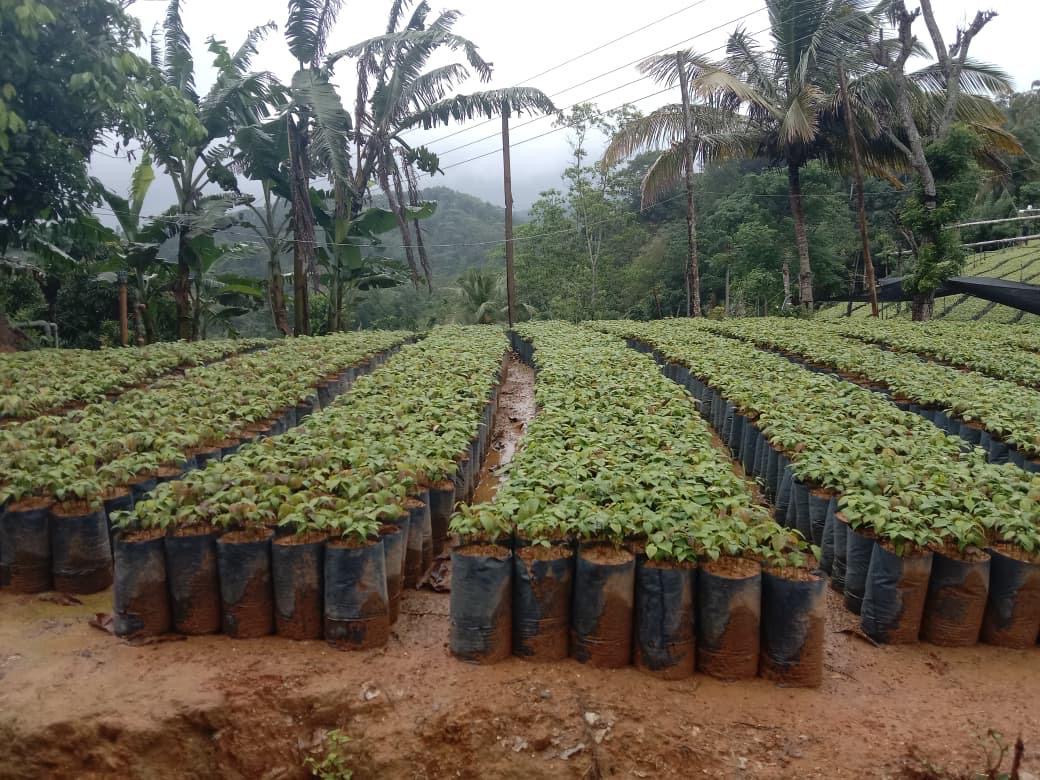
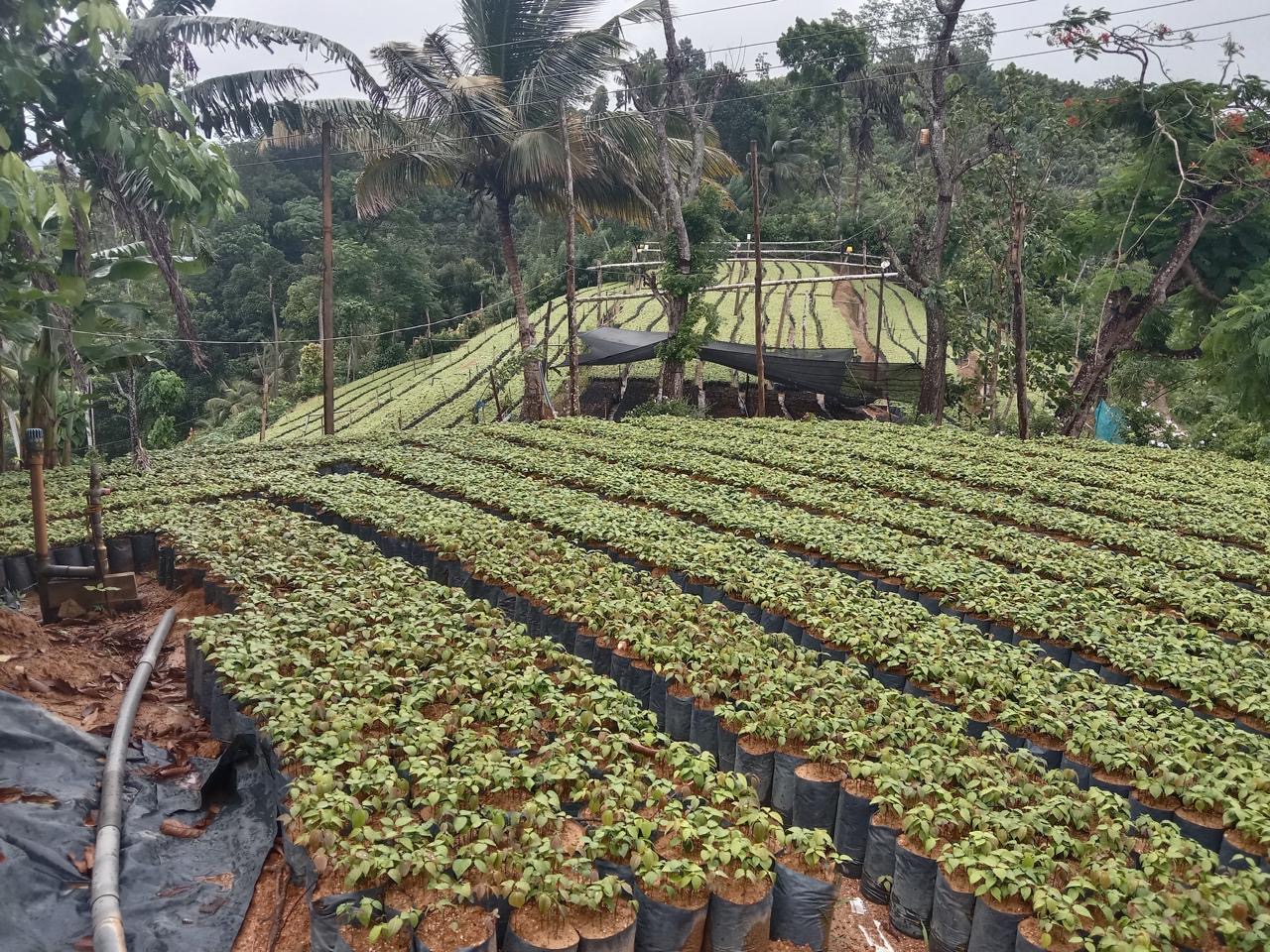
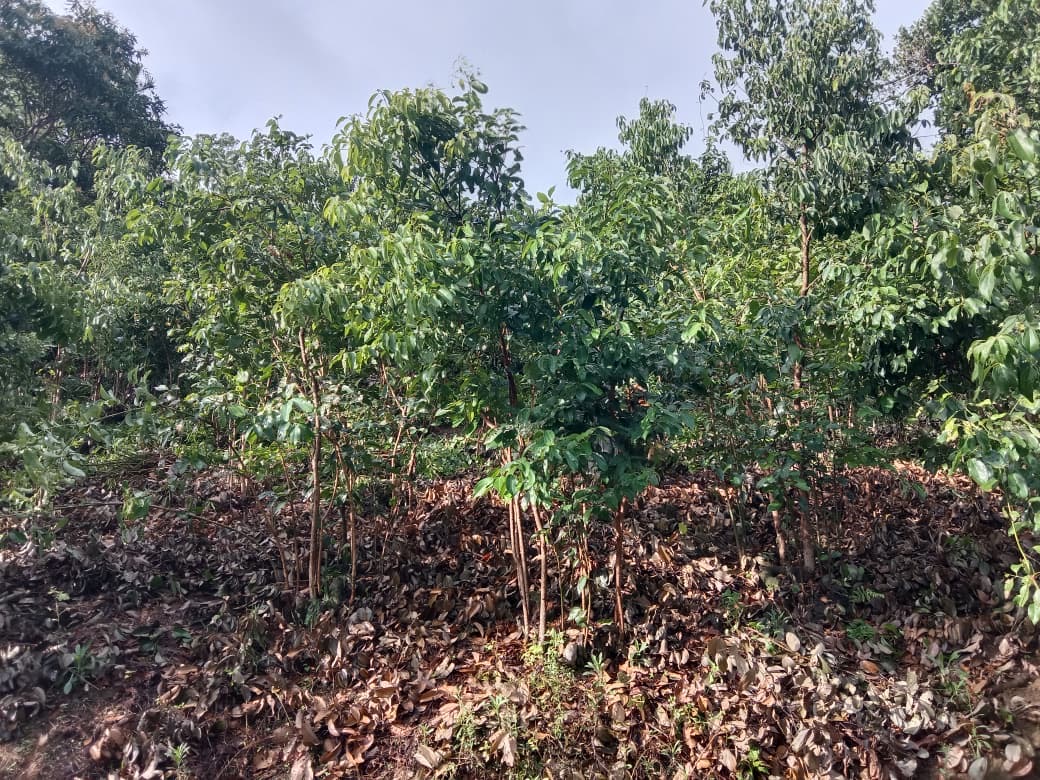
The majority of commercial cinnamon plantations are monocultures. Seedlings are planted in high-density blocks (often 9,000 to 14,000 plants per hectare) spaced tightly in rows. Mature cinnamon bushes yield the thickest, most easily peeled bark when grown in direct, unshaded sunlight. Commercial farms therefore clear overstory shade to maximize growth rates and yield per acre. Monocultures allow standard management practices like regular weeding, systemic coppicing (harvesting shoots down to ground level) and access fertilizer application.
Cinnamon is a popular intercrop under coconut palms or rubber trees, especially while the other trees are young and spaced widely enough to let the sunlight through. A large portion of Sri Lanka’s total cinnamon production originates from smallholders, with home gardens, where cinnamon is rarely grown alone. Cinnamon is planted alongside other high-value spices (pepper, cloves, nutmeg, cardamom), fruit trees (jackfruit, banana), and shade trees.
5. Climatic Requirements of Cinnamon
Cinnamon is a tropical perennial crop and performs particularly well under warm and humid conditions. According to the Department of Cinnamon Development, suitable conditions include:
- Temperature: approximately 25–35°C
- Annual rainfall: generally, above 1,875 mm under rainfed conditions
- Relative humidity: approximately 75–85%
- Altitude: commercial cultivation possible up to about 700 m above mean sea level
- Soils: deep, well-drained soils are preferred.
Other technical literature gives somewhat different optimum ranges, including suitable temperatures around 25–32°C and rainfall of approximately 1,750–3,500 mm. These differences reflect the fact that cinnamon can tolerate a relatively broad range of tropical conditions rather than requiring one exact climate.
6. Effect of Rainfall
Rainfall is one of the most important geographical and climatic factors affecting cinnamon farming.
Cinnamon requires adequate moisture for:
- Vegetative growth
- Development of new shoots
- Bark formation
- Recovery after harvesting
- Maintaining healthy plantations
The crop generally performs well in wet and intermediate climatic zones. However, prolonged drought can reduce growth and productivity. The Department of Cinnamon Development notes that cinnamon can be cultivated under lower-rainfall conditions when adequate irrigation is available.
Galle
Galle generally has favourable conditions for cinnamon cultivation. High rainfall and humidity support vegetative growth and reduce moisture stress. This helps explain the district’s historically large cinnamon-growing area. However, excessive rainfall can also create problems if soils have inadequate drainage. Heavy rainfall may contribute to soil erosion on sloping land and nutrient losses through leaching.
Matara
Matara also provides generally favourable conditions for cinnamon. Parts of the district combine adequate rainfall with suitable soils and low-to-moderate elevations. Weligama and Mulatiyana are areas with considerable potential for expansion of cinnamon cultivation.
Hambantota
Hambantota is drier than Galle and Matara. Consequently, rainfall variability has a greater effect on cinnamon production. Prolonged dry periods can cause moisture stress, particularly in newly established plantations. Irrigation, mulching, soil-water conservation and appropriate site selection can therefore become more important in Hambantota.
7. Effect of Temperature
Temperature influences photosynthesis, shoot development and overall plant growth. Southern Sri Lanka generally provides temperatures suitable for cinnamon because of its tropical location and relatively low elevations.
Increasing temperatures can potentially:
- Increase evaporation and soil-water loss.
- Increase moisture stress during dry periods.
- Alter pest and disease conditions.
- Affect the timing of harvesting.
- Increase irrigation requirements.
Temperature does not operate independently; its effect becomes more significant when combined with other factors, particularly rainfall shortages.
8. Effect of Relative Humidity
High atmospheric humidity is generally favourable for cinnamon. The Department of Cinnamon Development gives an optimum relative humidity range of approximately 75–85%. The humid environment of much of Galle and Matara is therefore favourable for cinnamon growth.
However, excessive humidity combined with poor air circulation and prolonged wetness may increase the risk of certain diseases. Good plantation spacing, pruning and drainage are therefore important.
9. Effect of Soil
Soil is one of the most important geographical factors determining cinnamon productivity and bark quality, which is economically important because the bark is the principal commercial product. Cinnamon requires soils that have:
- Good drainage
- Adequate depth
- Moisture retention without waterlogging
- Appropriate soil fertility
- Suitable acidity: technical literature indicates that a soil pH around 5.5–6.5 is favourable for good growth and yield.
The principal cinnamon-growing soils of Sri Lanka include:
- Red Yellow Podzolic soils
- Reddish Brown Latosols
- Loamy soils
- Lateritic gravelly soils
- Suitable sandy and sandy-loam soils
The Department of Cinnamon Development identifies the wet-zone red soils, particularly Red Yellow Podzolic soils, as important for cinnamon production. Sandy and sandy-loam soils can also support cultivation under appropriate conditions. Galle and Matara contain considerable areas of loamy, lateritic and gravelly soils suitable for cinnamon.
10. Effect of Elevation
Cinnamon is mainly a low- and medium-elevation crop. The Department of Cinnamon Development indicates that commercial cultivation can extend to around 700 m above sea level, although low elevations are particularly important for commercial production.
Elevation influences:
- Temperature
- Rainfall
- Humidity
- Drainage
- Soil conditions
- Plantation microclimate
Most important cinnamon-growing areas in Southern Sri Lanka are located at relatively low elevations.
11. Effect of Slope and Topography
Moderately sloping, well-drained land can prevent waterlogging and provide favourable drainage. However, steep slopes can cause:
- Soil erosion
- Loss of nutrients
- Exposure of plant roots
- Reduced soil depth
- Difficulty in plantation management and harvesting
The Department of Cinnamon Development states that land with a slope greater than 60% is not advisable for commercial cinnamon cultivation and identifies shallow, stony and/ or poorly drained and waterlogged lands as unsuitable.
Cinnamon cultivation in Southern Sri Lanka is sometimes linked to inadequate soil-conservation practices on sloping lands and associated soil erosion problems.
12. Area-based Analysis of Southern Sri Lanka
Galle District
Galle is historically the most important cinnamon-producing district of Southern Province. The combination of:
- High rainfall
- High humidity
- Warm temperatures
- Suitable lowland elevation
- Favourable soils
- Long-established farming knowledge
creates highly suitable conditions for cinnamon.
Potential additional cinnamon areas were also identified within the district. However, excessive shade from intercropping practices can reduce conditions required for high-quality quill production.
The major environmental concerns are:
- Soil erosion on slopes
- Nutrient leaching
- Excess moisture in poorly drained locations
- Increasing rainfall variability.
Matara District
The district includes areas with favourable combinations of rainfall, soil and elevation. Weligama and Mulatiyana were identified as areas with substantial potential for expansion. The main advantages are:
- Suitable rainfall
- Warm and humid climate
- Appropriate soils
- Suitable low and intermediate elevations
- Established cinnamon-processing and farming communities
The major environmental concerns are:
- Soil erosion in sloping areas
- Changes in rainfall distribution
- Nutrient depletion
- Need for improved soil and water management.
Hambantota District
Hambantota differs geographically and climatically from Galle and Matara because large parts of the district experience relatively drier conditions. Walasmulla, Katuwana, Okewela and Beliatta were identified as areas with potential for cinnamon expansion. The main advantages are:
- Suitable warm temperatures
- Areas with appropriate soils and elevation
- Land availability in some locations with expansion potential
The major environmental concerns are:
- Lower and more variable rainfall than wetter parts of the Southern Province
- Longer dry periods
- Greater dependence on soil-water conservation and irrigation
- Higher potential for drought-related stress
A comparative analysis of these three production areas is provided in Table 2.
Table 2. Comparative analysis of key production areas
|
Factor |
Galle | Matara | Hambantota |
|---|---|---|---|
| Rainfall suitability | High | High | Moderate |
| Humidity | High | High | Moderate |
| Temperature | Suitable | Suitable | Suitable |
| Drought risk | Relatively low | Moderate | Relatively high |
| Soil suitability | High | High | Variable |
| Cinnamon extent | Highest | Intermediate | Lowest |
| Irrigation importance | Low | Moderate | High in dry periods |
| Soil erosion concern | On slopes | On slopes | On bare land |
| Expansion potential | Limited | High in selected areas | High in selected areas |
13. Effects of Climate Change on Cinnamon Farming
Climate variability is becoming an important consideration for cinnamon production. A 2025 research project focusing specifically on southern Sri Lanka identified climate variability, declining soil health and limited access to local weather forecasts and soil information as challenges for cinnamon farmers.
Changes in rainfall
Changes in the timing, duration and intensity of rainfall can affect:
- Shoot growth
- Harvesting schedules
- Soil moisture
- Fertilizer efficiency
- Disease conditions
Heavy rainfall
Very intense rainfall can result in:
- Soil erosion
- Nutrient leaching
- Waterlogging in poorly drained fields
- Damage to young plants
Drought
Longer dry periods can cause:
- Reduced shoot development
- Lower yields
- Poor recovery after harvesting
- Increased irrigation requirements
This issue is particularly relevant to the comparatively dry areas of Hambantota.
Increasing temperature
Higher temperatures may increase evapotranspiration and water requirements. The effects may be strongest during periods when rainfall is inadequate.
14. Management Practices
Climate and physical geography are not the only factors determining production. Farming practices interact strongly with the environment. Important management practices include:
- Soil conservation
- Correct pruning
- Fertilizer management
- Weed management
- Drainage
- Irrigation where necessary
- Selection of appropriate planting material
- Proper harvesting intervals
Research in Southern Sri Lanka has identified inadequate soil conservation, poor fertilizer knowledge and inappropriate pruning as factors associated with lower productivity in some plantations. The Department of Cinnamon Development continues to conduct research on environmentally sustainable agricultural practices, soil conservation, soil and plant nutrition, improved cultivars and other aspects of cinnamon production.
15. Cinnamon Production
Sri Lanka has more than 85% of the world market share for true cinnamon. Currently, it is exported to the global market under the national brand ‘Pure Ceylon Cinnamon,’ which belongs to the Export Development Board (EDB). This trademark has been registered in key cinnamon export markets, such as the European Union, the United States, Peru, Colombia, and Mexico.
How Ceylon and Cassia Cinnamon differ
Ceylon cinnamon generally referred to as “sweet cinnamon” or “true cinnamon” is preferred to other varieties on the global market due to its specific flavour, aroma, and delicate texture. Ceylon cinnamon has a sweeter taste than Cassia cinnamon, and exhibits an aroma of citrus, florals and cloves. Those who are used to the sharp, intense pungency of common Cassia cinnamon will find the flavour of Ceylon cinnamon to be distinctly different.
Cinnamon contains Coumarin, which damages the kidneys and the liver. The volume of Coumarin in Ceylon Cinnamon is very low when compared to Cassia Cinnamon. The levels are within the safety limits recommended by FAO/ WHO standards.
Harvesting and Processing
The first harvest can be obtained three years after planting, with harvesting taking place once the stem’s bark turns brown and its diameter reaches approximately 5 cm. The bark is harvested once a year. Before the bark is removed, branches and leaves are stripped from the harvested stems, and the bark must be peeled on the same day. After removing the light-brown outer bark of the Ceylon cinnamon tree, a soft, pale-yellow inner bark is revealed. This inner layer is separated and dried to produce the world-renowned Ceylon cinnamon.
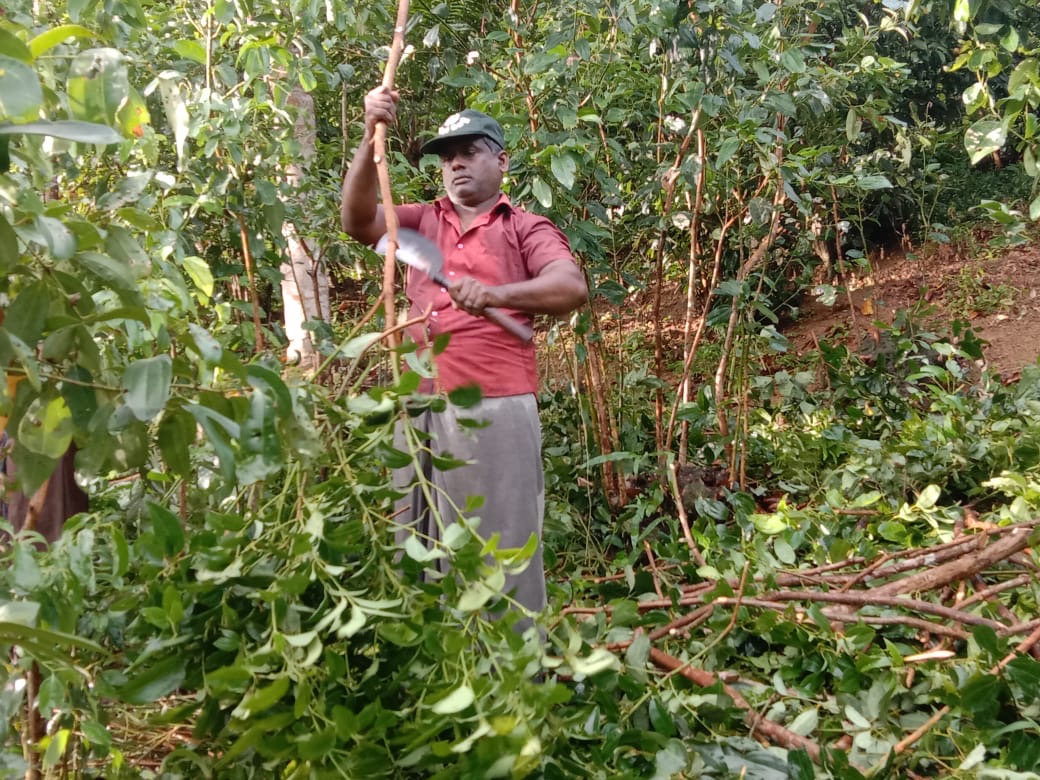
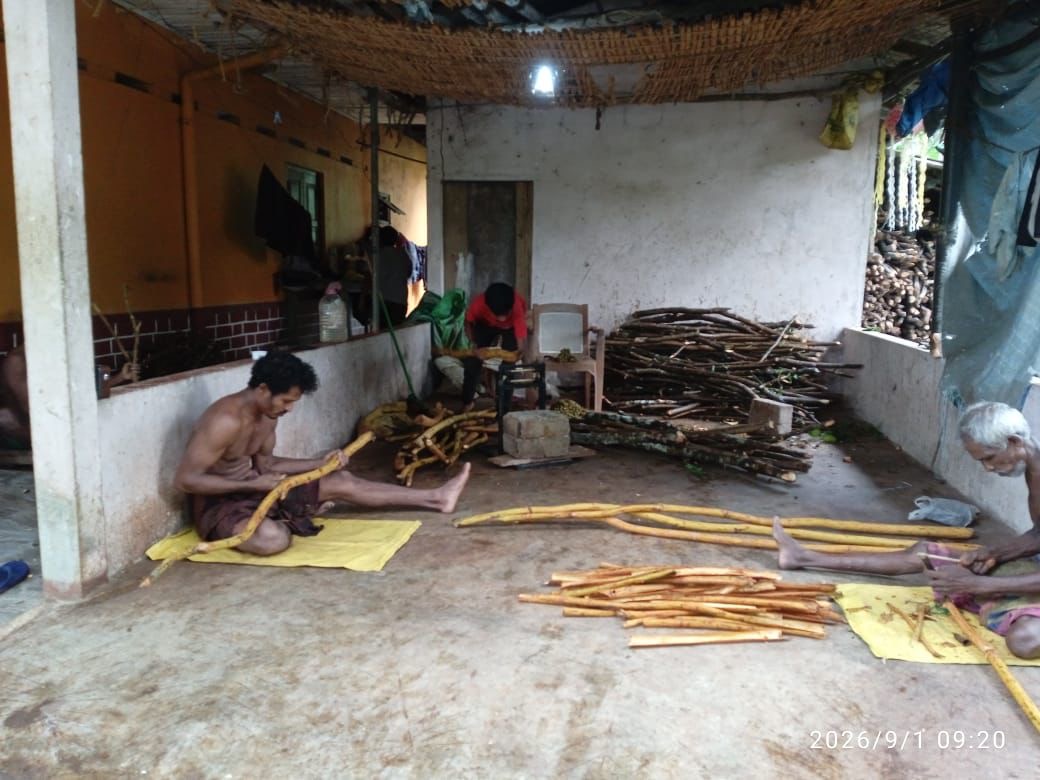
The cinnamon peeling process is an ancient tradition utilizing the same tools employed centuries ago. It is a specialized task performed by skilled professional workers. Seated on the ground and using traditional tools, the peeler scrapes away the rough outer bark of the cinnamon stem. The inner bark is thoroughly rubbed with a brass rod to smooth its surface and loosen it from the hard wood. Then, two parallel cuts along the prepared cinnamon stem are made and the cutter removes the soft inner layer as a single piece, ensuring the bark is neither damaged nor fragmented. To form Ceylon cinnamon quills, these thin, delicate layers are assembled by overlapping them, nesting them within one another, and joining them end-to-end.
The assembled quills are covered and kept to ferment for a day, after which they are air-dried indoors on racks positioned at roof level for a period of four to seven days. Upon drying, the cinnamon quills transform into golden rolls. They are then cut to a length of 42 inches in accordance with global cinnamon market standards.
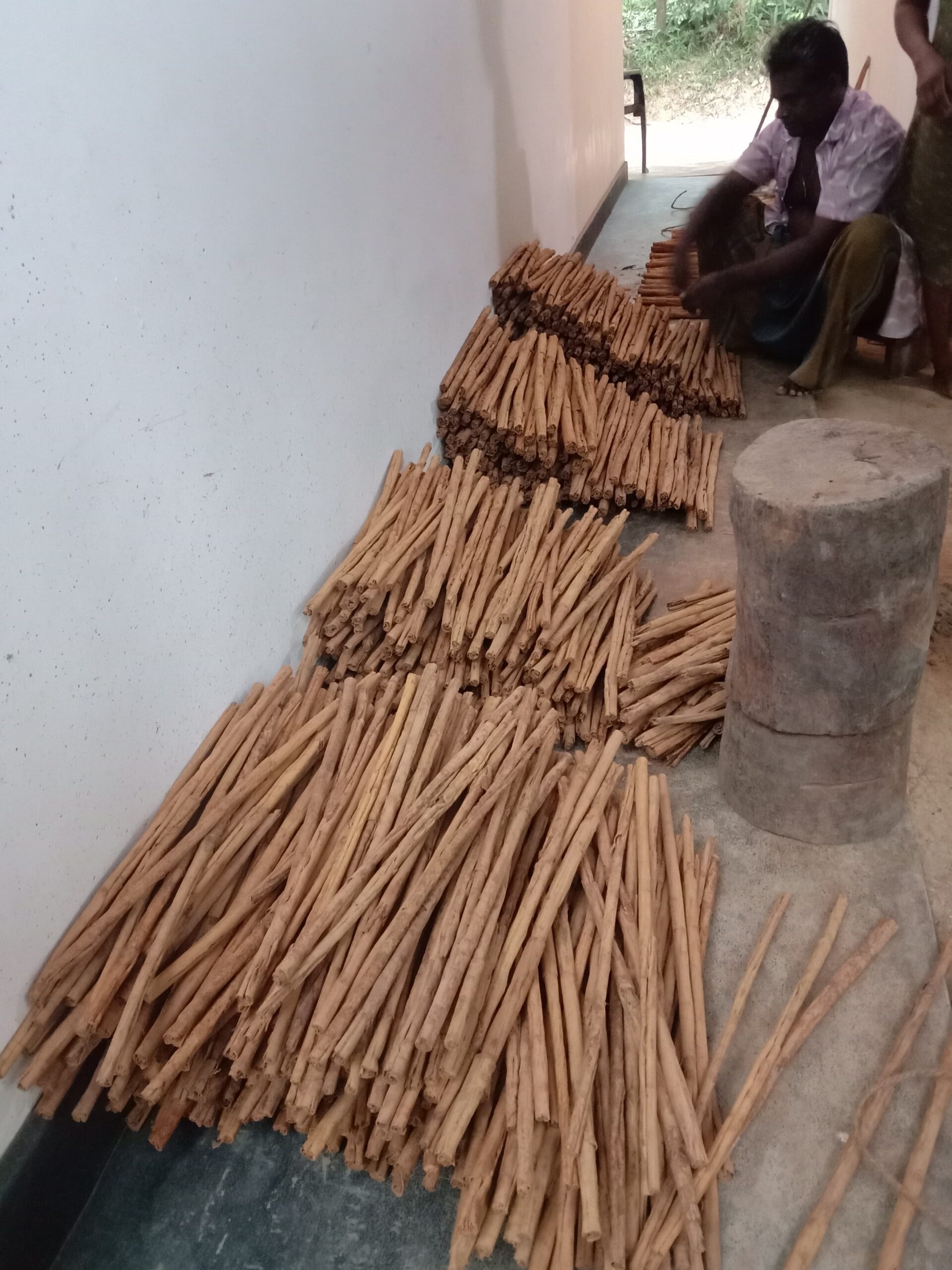
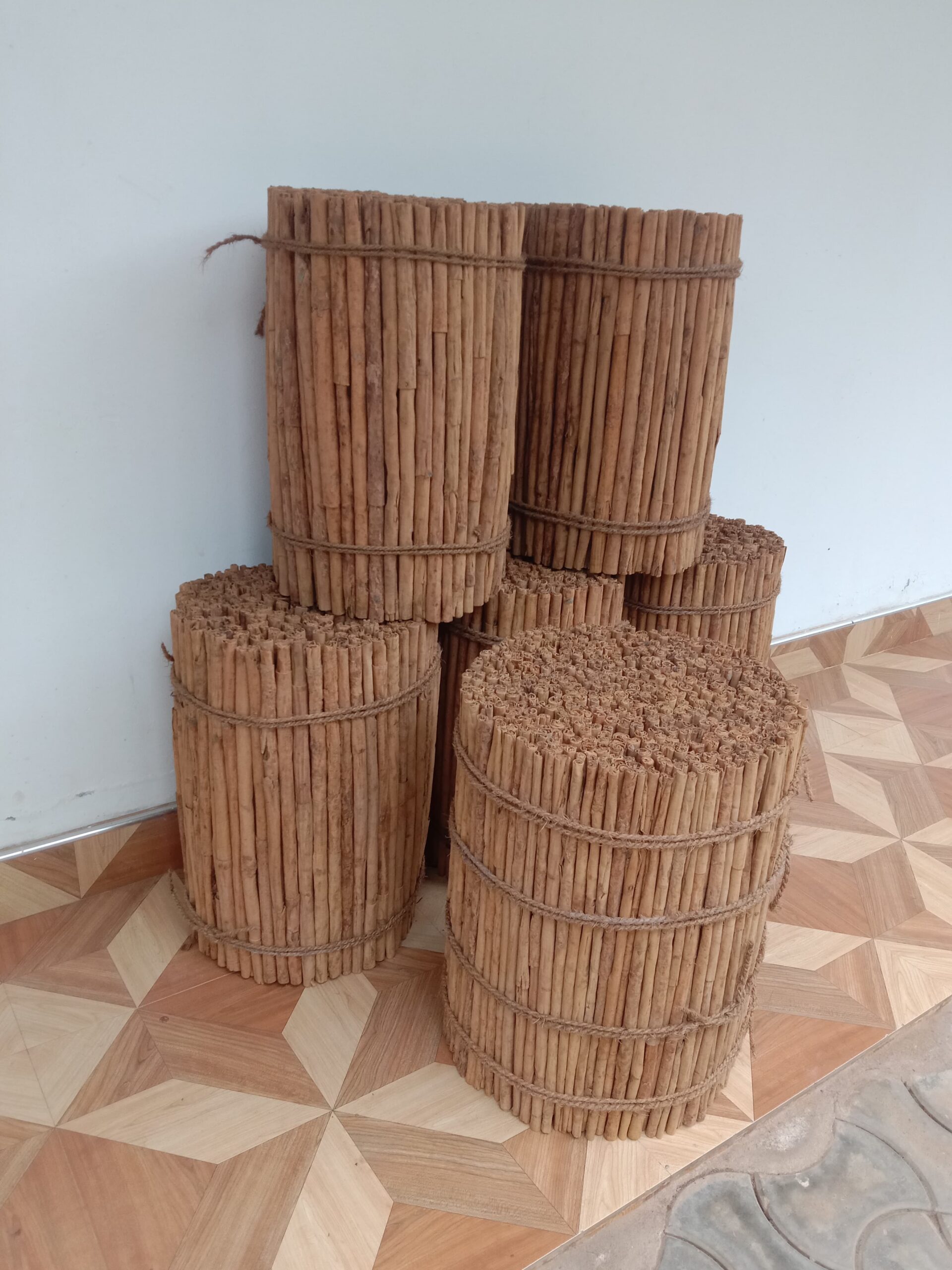
During the packaging process, these cinnamon sticks are packed into small containers or packets. They may also be processed into cinnamon powder or cinnamon chips or used to extract cinnamon bark oil. Leaves are used to extract cinnamon leaf oil.
Development of the industry in Sri Lanka
The Export Development Board (EDB), in collaboration with the Spice Council, has taken steps to increase numbers and upgrade the skills of cinnamon peelers by establishing a Cinnamon Training Academy. Traditional cinnamon peeling centres have been helped to meet Good Manufacturing Practices (GMP). This includes training in peeling processes that adhere to food safety standards such as Hazard Analysis Critical Control Point (HACCP). As a result, certain exporters have obtained (HACCP) certification to ensure compliance with the food regulations and quality standards required by the international market.
The primary objective of this support was to increase cinnamon exports by 30–50% within two to three years, and to gain access to European, American, and Japanese markets that demand high-quality, value-added products.
16. Conclusion
Cinnamon farming in Southern Sri Lanka is strongly influenced by the interaction between climate and geography. Galle and Matara possess particularly favourable combinations of rainfall, humidity, temperature, soil and elevation, which help explain their historically large cinnamon-growing areas. Hambantota also has important cinnamon-growing areas, but its relatively drier climate makes water management more important.
Among climatic factors, rainfall, temperature and humidity are particularly important, while among geographical factors, soil type, elevation, drainage and slope strongly influence plantation performance. Excessive rainfall, soil erosion, drought and changing weather patterns can negatively affect production when appropriate management practices are absent.
The future of cinnamon farming in Southern Sri Lanka therefore depends not only on expanding cultivation but also on matching cultivation practices to local environmental conditions. Area-specific climate information, soil management, water conservation and improved agricultural practices can contribute to more sustainable and climate-resilient cinnamon production.
17. Recommendations
Based on the geographical and climatic characteristics of Southern Sri Lanka, the following measures can help improve cinnamon farming:
- Promote soil conservation on sloping lands through contour-based practices, mulching and appropriate ground cover.
- Improve water management in Hambantota and other areas vulnerable to prolonged dry periods.
- Improve drainage in locations exposed to excessive rainfall or temporary waterlogging.
- Use site-specific fertilizer management based on soil conditions rather than applying identical recommendations to all areas.
- Strengthen weather-based agricultural advisories. Sri Lanka’s Department of Agriculture maintains agro-meteorological services and provides seasonal and monthly agricultural weather information.
- Use climate-resilient cultivation practices, particularly in areas experiencing greater rainfall variability.
- Improve farmer access to localized soil and weather information, which can support decisions about planting, harvesting, irrigation and fertilizer application.
- Map cinnamon suitability using remote sensing and GIS. Previous research in Southern Province has demonstrated the value of these tools for analysing changes in cinnamon cultivation.
- Protect high-quality traditional cinnamon-growing environments, particularly where soil and climatic conditions contribute to premium bark quality.
Jayamini Samarakoon
Field Manager at Resilience Constellation